Friday, 17 April 2020
Review: The Queen’s Choice by Anne O’Brien
A completely enthralling read about the Duchess of Brittany who became Queen Joanna when she married Henry IV (the father of the famous Henry V who won the Battle of Agincourt). Having won the crown through booting Richard II off the throne, Henry IV spends most of his reign trying to hold on to his own crown. Life in England isn’t what Joanna expected, having ruled alongside her first husband in Brittany and then in her own right as regent. The English view her with suspicion and resentment. She never lets go of, or hides, her intellect and experience. A great lesson in knowing your worth and owning it despite the opposition around you. I’ll definitely read more of Anne O’Brien’s books.

Thursday, 16 April 2020
Review: Vagabonds, by Hao Jingfang (English translation by Ken Liu)
Wow, what an epic read this was! And I mean that both in scope and investment of time. It's not a quick read (clocking in at 600 pages for the hardback version) but it's definitely worth the time.
The novel is set in the 23rd Century. One hundred years previously, the people of Mars have declared their independence from the Terrans (Earth) who had set up mankind on Mars. Conflict and separation became hallmarks of the time until one of the founders of the Mars Republic opened up diplomatic channels between the two planets. Five years before the novel begins, a group of teenagers from Mars were sent to Earth, age 13, to act as ambassadors. Upon their return, they are accompanied by a delegation of Terrans to establish further trade and diplomatic ties.
The peace between the two worlds is a fragile one. After viewing each other with suspicion, and even hatred, for a relatively long period of time, something simple could shatter the hard-won peace.
Luoying, the main character, is the granddaughter of the Consul of Mars. However, upon her return she discovers that she was sent in someone else's place. This is the tip of the iceberg, however, in terms of the secrets she discovers in the greater politics of Mars, and even in her own family.
Feeling constantly torn between Mars and Earth, she wonders if she can even have a place of either world, any more, and feel at peace there. Her friends, fellow Mercury Group ambassadors (the group who went to Earth) speak increasingly of revolution as they see the system on Mars being more restrictive than egalitarian.
On a macro level, the two worlds seem to be examinations of extreme capitalism (Earth) and socialism (Mars). The novel concludes that neither system is far from perfect, and despite the pros and cons of both, changes to either system would bring more problems. This seems pessimistic, but it is realistic as well. With Mars having such finite resources, it was understandable how they had to develop the system they did.
Both in breadth and depth, this novel is highly impressive. Hao Jingfang writes about this world on Mars so convincingly one could easily believe it was real, or at least could be a possibility in the future. Despite the length, it doesn't get dull. In fact, each chapter brings a new revelation, a new and interesting understanding of life on Mars and its complex relationship with Earth.
The characters are completely endearing, too. Although Luoying seems passive and indecisive at times, it's understandable given her dilemma between having to choose between the worlds. Throughout the novel, though, she grows into herself, becoming more adventurous, taking risks, and even stopping a potentially fatal insurgence towards the end.
I have to give a shout-out to the translator, Ken Liu, as well. He has done a superb job of translating tricky concepts and lots of technical know-how in the book that I hope the author would be thrilled with. The result is a very moving, thought-provoking and, on many occasions, beautiful read.

The novel is set in the 23rd Century. One hundred years previously, the people of Mars have declared their independence from the Terrans (Earth) who had set up mankind on Mars. Conflict and separation became hallmarks of the time until one of the founders of the Mars Republic opened up diplomatic channels between the two planets. Five years before the novel begins, a group of teenagers from Mars were sent to Earth, age 13, to act as ambassadors. Upon their return, they are accompanied by a delegation of Terrans to establish further trade and diplomatic ties.
The peace between the two worlds is a fragile one. After viewing each other with suspicion, and even hatred, for a relatively long period of time, something simple could shatter the hard-won peace.
Luoying, the main character, is the granddaughter of the Consul of Mars. However, upon her return she discovers that she was sent in someone else's place. This is the tip of the iceberg, however, in terms of the secrets she discovers in the greater politics of Mars, and even in her own family.
Feeling constantly torn between Mars and Earth, she wonders if she can even have a place of either world, any more, and feel at peace there. Her friends, fellow Mercury Group ambassadors (the group who went to Earth) speak increasingly of revolution as they see the system on Mars being more restrictive than egalitarian.
On a macro level, the two worlds seem to be examinations of extreme capitalism (Earth) and socialism (Mars). The novel concludes that neither system is far from perfect, and despite the pros and cons of both, changes to either system would bring more problems. This seems pessimistic, but it is realistic as well. With Mars having such finite resources, it was understandable how they had to develop the system they did.
Both in breadth and depth, this novel is highly impressive. Hao Jingfang writes about this world on Mars so convincingly one could easily believe it was real, or at least could be a possibility in the future. Despite the length, it doesn't get dull. In fact, each chapter brings a new revelation, a new and interesting understanding of life on Mars and its complex relationship with Earth.
The characters are completely endearing, too. Although Luoying seems passive and indecisive at times, it's understandable given her dilemma between having to choose between the worlds. Throughout the novel, though, she grows into herself, becoming more adventurous, taking risks, and even stopping a potentially fatal insurgence towards the end.
I have to give a shout-out to the translator, Ken Liu, as well. He has done a superb job of translating tricky concepts and lots of technical know-how in the book that I hope the author would be thrilled with. The result is a very moving, thought-provoking and, on many occasions, beautiful read.

Thursday, 2 April 2020
Review: Everything is going to be K.O. by Kaiya Stone.
Kaiya Stone has written a brilliantly funny, witty, and moving memoir about her journey through education, culminating in studying Classics at Oxford University, where she was diagnosed with Dyslexia and Dyspraxia. For the whole of her education before this, her neuro-divergence had simply slipped people's notice - even for the few that did notice, because she was 'coping' they didn't pursue it.
Kaiya has seen almost every kind of educational setting - a Montessori school in South Africa; the American school system with enough resources to help get her the 1-1 help she needed; overcrowded primary school classes; and private school. Most of these places told Kaiya the same thing - that she verbally could do very well, but was hopeless on paper. Unfortunately, that's what matters most in many school systems worldwide. Had it not been for Kaiya's tutor at Oxford, her SpLD would have gone unnoticed still, and she would not have been able to fulfil her potential.
Kaiya's experiences really give a much-needed insight into the kind of disabilities we don't always see at school. As a teacher, I know I've been guilty in the past of just assuming that some children will just get on with it, while they may internally be screaming for help. Our education is only fit for a very small group of students. How much potential are we missing out on because of this? I've had my fair share of ranting about why the education system isn't fit for purpose, but that's an opinion from someone who benefited from the system as it is. I am part of a minority, and I'm aware of that. Our system needs a radical overhaul if we want children to thrive and not have school or education be some of the worst memories of their lives.
If we can learn so much from just this one memoir about someone who had to learn to cope in a world that was not built for them, how much more should we be seeking stories and experiences from people who are not neurotypical or able-bodied? We all know the repercussions and legacy of isms and phobias such as racism, sexism, homophobia, etc, but we pay far less attention - to our societal detriment - of ableism (discrimination against disabled people). We need to level the playing field (sometimes literally) and this needs to be done from the bottom up.
Kaiya has seen almost every kind of educational setting - a Montessori school in South Africa; the American school system with enough resources to help get her the 1-1 help she needed; overcrowded primary school classes; and private school. Most of these places told Kaiya the same thing - that she verbally could do very well, but was hopeless on paper. Unfortunately, that's what matters most in many school systems worldwide. Had it not been for Kaiya's tutor at Oxford, her SpLD would have gone unnoticed still, and she would not have been able to fulfil her potential.
Kaiya's experiences really give a much-needed insight into the kind of disabilities we don't always see at school. As a teacher, I know I've been guilty in the past of just assuming that some children will just get on with it, while they may internally be screaming for help. Our education is only fit for a very small group of students. How much potential are we missing out on because of this? I've had my fair share of ranting about why the education system isn't fit for purpose, but that's an opinion from someone who benefited from the system as it is. I am part of a minority, and I'm aware of that. Our system needs a radical overhaul if we want children to thrive and not have school or education be some of the worst memories of their lives.
If we can learn so much from just this one memoir about someone who had to learn to cope in a world that was not built for them, how much more should we be seeking stories and experiences from people who are not neurotypical or able-bodied? We all know the repercussions and legacy of isms and phobias such as racism, sexism, homophobia, etc, but we pay far less attention - to our societal detriment - of ableism (discrimination against disabled people). We need to level the playing field (sometimes literally) and this needs to be done from the bottom up.
Monday, 30 March 2020
Review: LOT stories by Bryan Washington.
NB: I received a free copy of this book in exchange for a review.
LOT stories centres on the (unnamed until the end) son of a Black mother and Latino father living in Houston, Texas. Their often chaotic life revolves around a restaurant that the father persuaded the mother to partner in when they first got together, not knowing how it would change their lives.
Most days, the main character works in the restaurant and tries to avoid his older brother, while resenting his older sister for her absence. The family see the father walk in and out of their lives on a regular basis, and the children chastise their mother for letting him push her around, until he finally leaves for good.
However, LOT is not just about this family. It's about the entire neighbourhood. The aftermath of Hurricane Harvey; a cleverly constructed story about a young baseball team and their fortunes as they grew up; a drug dealer who takes a Guatemalan teenager under his wing; and a group of male prostitutes and the house they live in.
Longing, desire, desperation for more, and the sense of ride-or-die community pervades through this novel. The neighbourhood is a place where many thrive, but more simply have to survive. They face increasing gentrification and the loss of their identity; poverty; gang and drug culture; but, as the boy communicates throughout the novel, it's not just a place that one can easily leave.
The style of the writing puts the reader right in the rooms and streets of the people whose lives are on display. The reader is up close and personal, to see the good, the bad, and the ugly of living in this community. It shows the struggles, the tenderness, the heart, and the longing of the people in the neighbourhood for something that is personal to them, but mostly it is just 'more'. What more is there to this life, or do they have to settle?
It's summed up well by an exchange the boy (now grown up) has with a white man he dates. The man said he was living in this neighbourhood for his job because it was the 'real Houston' whereas the boy says if someone gave him an out, there wouldn't be time to finish the sentence.
Considering this is Washington's debut, he seems to have the lived and writing experience of someone already many years into their career. It is one of the most gut-wrenching and compassionate novels I have ever read and I can't wait to see what he does next.
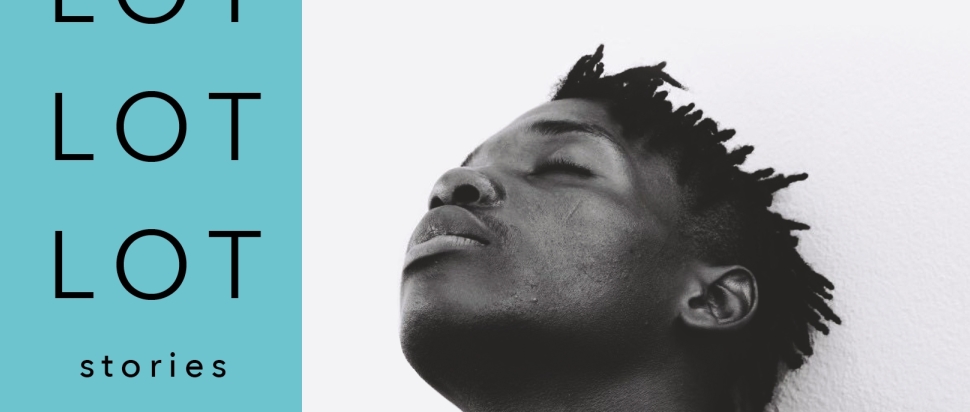
LOT stories centres on the (unnamed until the end) son of a Black mother and Latino father living in Houston, Texas. Their often chaotic life revolves around a restaurant that the father persuaded the mother to partner in when they first got together, not knowing how it would change their lives.
Most days, the main character works in the restaurant and tries to avoid his older brother, while resenting his older sister for her absence. The family see the father walk in and out of their lives on a regular basis, and the children chastise their mother for letting him push her around, until he finally leaves for good.
However, LOT is not just about this family. It's about the entire neighbourhood. The aftermath of Hurricane Harvey; a cleverly constructed story about a young baseball team and their fortunes as they grew up; a drug dealer who takes a Guatemalan teenager under his wing; and a group of male prostitutes and the house they live in.
Longing, desire, desperation for more, and the sense of ride-or-die community pervades through this novel. The neighbourhood is a place where many thrive, but more simply have to survive. They face increasing gentrification and the loss of their identity; poverty; gang and drug culture; but, as the boy communicates throughout the novel, it's not just a place that one can easily leave.
The style of the writing puts the reader right in the rooms and streets of the people whose lives are on display. The reader is up close and personal, to see the good, the bad, and the ugly of living in this community. It shows the struggles, the tenderness, the heart, and the longing of the people in the neighbourhood for something that is personal to them, but mostly it is just 'more'. What more is there to this life, or do they have to settle?
It's summed up well by an exchange the boy (now grown up) has with a white man he dates. The man said he was living in this neighbourhood for his job because it was the 'real Houston' whereas the boy says if someone gave him an out, there wouldn't be time to finish the sentence.
Considering this is Washington's debut, he seems to have the lived and writing experience of someone already many years into their career. It is one of the most gut-wrenching and compassionate novels I have ever read and I can't wait to see what he does next.
Monday, 23 March 2020
Review: Second Sister by Chan Ho-Kei
NB: I received a copy of this novel in exchange for a review.
Nga-Yee, a librarian who lives with her school-age younger sister after the death of their parents, arrives home one day to find her sister has committed suicide. Unable to believe that her sister would do this, she vows to track down the people responsible and make them pay.
Months earlier, Nga-Yee's sister, Siu-Man, had been sexually assaulted on a busy train. With the help of onlookers, she identified the man responsible and he was sent to jail. However, shortly after, a social media post - claiming to be from the man's nephew - smeared Siu-Man, calling her a liar. Weeks of cyber-bullying followed, pushing Siu-Man to her death.
Nga-Yee tries the normal private detective route but the one she finds explains this task will be impossible for him. He, instead, puts her in touch with a hacker who, for a hefty price, takes on her case.
The scale and scope of this novel is impressive and Chan Ho-Kei sensitively handles the distressing nature of the subject material. He shows how cyber-bullying has many elements to it and there are many more players than first appear. The plot and pace tick along without a dull moment, with enough twists and turns to keep even the most savvy reader guessing. Even when one thinks all the mysteries have been revealed, more questions and answers appear.
The teenage experience is examined well here, especially with the concern to always perform well on social media, knowing that one can get digitally crucified with even a small misstep. It exposes the dark side of the internet, the uneasy knowledge that none of our digitally-stored information can be kept truly secure, and how important it is to always be aware of what we put online.
This is a brilliantly written novel, and its themes and questions will leave the reader more aware of the importance of keep not just their physical selves save, but their digital ones, too.

Nga-Yee, a librarian who lives with her school-age younger sister after the death of their parents, arrives home one day to find her sister has committed suicide. Unable to believe that her sister would do this, she vows to track down the people responsible and make them pay.
Months earlier, Nga-Yee's sister, Siu-Man, had been sexually assaulted on a busy train. With the help of onlookers, she identified the man responsible and he was sent to jail. However, shortly after, a social media post - claiming to be from the man's nephew - smeared Siu-Man, calling her a liar. Weeks of cyber-bullying followed, pushing Siu-Man to her death.
Nga-Yee tries the normal private detective route but the one she finds explains this task will be impossible for him. He, instead, puts her in touch with a hacker who, for a hefty price, takes on her case.
The scale and scope of this novel is impressive and Chan Ho-Kei sensitively handles the distressing nature of the subject material. He shows how cyber-bullying has many elements to it and there are many more players than first appear. The plot and pace tick along without a dull moment, with enough twists and turns to keep even the most savvy reader guessing. Even when one thinks all the mysteries have been revealed, more questions and answers appear.
The teenage experience is examined well here, especially with the concern to always perform well on social media, knowing that one can get digitally crucified with even a small misstep. It exposes the dark side of the internet, the uneasy knowledge that none of our digitally-stored information can be kept truly secure, and how important it is to always be aware of what we put online.
This is a brilliantly written novel, and its themes and questions will leave the reader more aware of the importance of keep not just their physical selves save, but their digital ones, too.
Tuesday, 17 March 2020
Review: The Treadstone Resurrection, Joshua Hood.
The main character, Adam Hayes, is an ex- CIA Treadstone operative who is trying to make a new life for himself, and convince his ex-wife that he can still be a good father to their son. However, this all gets turned upside down when assassins turn up to a house he is working on and Hayes narrowly escapes with his life.
The cause of this is that Adam has received an email from an old colleague that would, if exposed, lead to hugely significant consequences for American foreign policy in South America and send shockwaves throughout the U.S. government.
For a while, Adam has no idea who he is investigating or running away from; all he knows is that he needs to survive. Bringing all of his old skills to bear, the result is a high-octane reader's experience that gives Bourne fans exactly what they love but in a new way. The action hardly ever lets up - in some cases, it becomes implausible but that stands to reason within this universe. The plot is well executed with more than a few twists and turns that will leave its readers satisfied at its conclusion.
This story is written by Joshua Hood, who is a former Airborne Division Fighter. There is plenty of technical jargon in the book, especially when it comes to the weapons, so it makes sense that it's written by someone with clear, in-depth knowledge.
The Treadstone Resurrection is an explosive new entry in the Bourne Universe that gives an action-packed, page-turning experience that will leave readers eagerly awaiting Adam Hayes' next mission - whether the character wants it or not.
Thursday, 5 March 2020
Review: Surge by Jay Bernard
NB: I received a free copy of this book in exchange for a review.
This book of poetry is an extraordinary debut from Jay Bernard. It shines a light on parts of Black British history that have been forgotten or ignored, beginning with an event called the New Cross Fire in 1981. Believed to have been a racist attack, thirteen young black people were killed at a birthday party by a house fire.
Bernard moves through history, exploring memories, cultures, and injustices that have not been made right, through to the Grenfell Tower fire and some of the awful responses to it, such as the online viral burning effigy.
The first poem, Arrival, is ambiguous in time - it could easily be the slave trade or the Windrush - but its tone is clear. Black people were seen as useful tools and nothing more - no freedom to rise, or dream, or be seen as equal citizens. It very clearly sets the pattern and tone of the rest of the poems, full of rage, despair (see, Losers), helplessness (see the poem Harbour about someone trapped in a fire), and a call to action.
There are more personal moments, as well. Poems such as Pride and Peg, where Bernard explores his identity as a queer black man.
This book of poetry is talent unparalleled. It is raw, powerful, moving, and leaves you with the kind of sadness that doesn't necessarily make you cry, but it's a deep ache.
Losers, the penultimate poem, to me speaks of the division of Britain today ever since the referendum. Bernard quite rightly points out that even the winners think they are losing - no one has won, everybody seems to have lost:
"You're either or you're not. There's no middle ground"
and
"Get lost with your truth and your news which never speaks for our lot."
The overall question for me throughout was, "who does this country work for?" Because the answer is definitely not the people in these poems.

This book of poetry is an extraordinary debut from Jay Bernard. It shines a light on parts of Black British history that have been forgotten or ignored, beginning with an event called the New Cross Fire in 1981. Believed to have been a racist attack, thirteen young black people were killed at a birthday party by a house fire.
Bernard moves through history, exploring memories, cultures, and injustices that have not been made right, through to the Grenfell Tower fire and some of the awful responses to it, such as the online viral burning effigy.
The first poem, Arrival, is ambiguous in time - it could easily be the slave trade or the Windrush - but its tone is clear. Black people were seen as useful tools and nothing more - no freedom to rise, or dream, or be seen as equal citizens. It very clearly sets the pattern and tone of the rest of the poems, full of rage, despair (see, Losers), helplessness (see the poem Harbour about someone trapped in a fire), and a call to action.
There are more personal moments, as well. Poems such as Pride and Peg, where Bernard explores his identity as a queer black man.
This book of poetry is talent unparalleled. It is raw, powerful, moving, and leaves you with the kind of sadness that doesn't necessarily make you cry, but it's a deep ache.
Losers, the penultimate poem, to me speaks of the division of Britain today ever since the referendum. Bernard quite rightly points out that even the winners think they are losing - no one has won, everybody seems to have lost:
"You're either or you're not. There's no middle ground"
and
"Get lost with your truth and your news which never speaks for our lot."
The overall question for me throughout was, "who does this country work for?" Because the answer is definitely not the people in these poems.
Subscribe to:
Posts (Atom)